
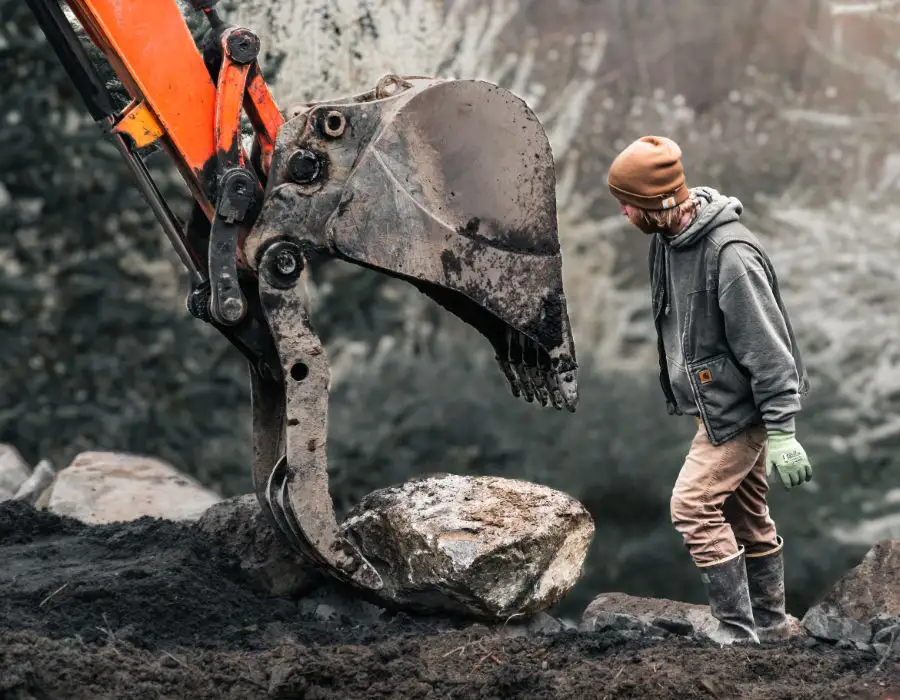
The Pacific Northwest scenery isn't just soil—it’s a shattered spine. Beneath emerald layers of moss and fern lies a jagged, volcanic skeleton that serves as the essential foundation for both the wild wilderness and the designed garden.
Click to enlarge.
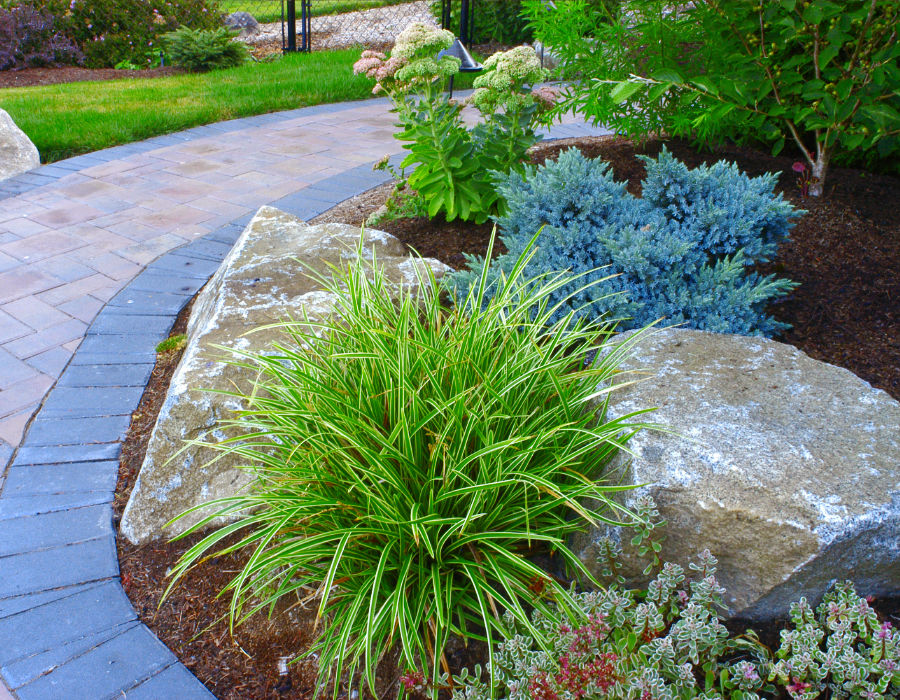
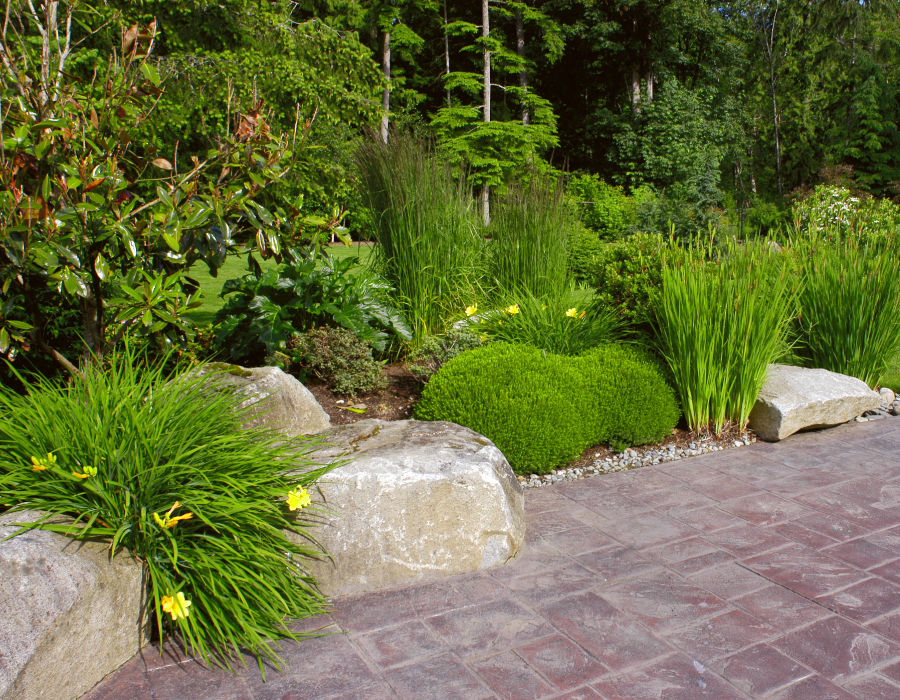
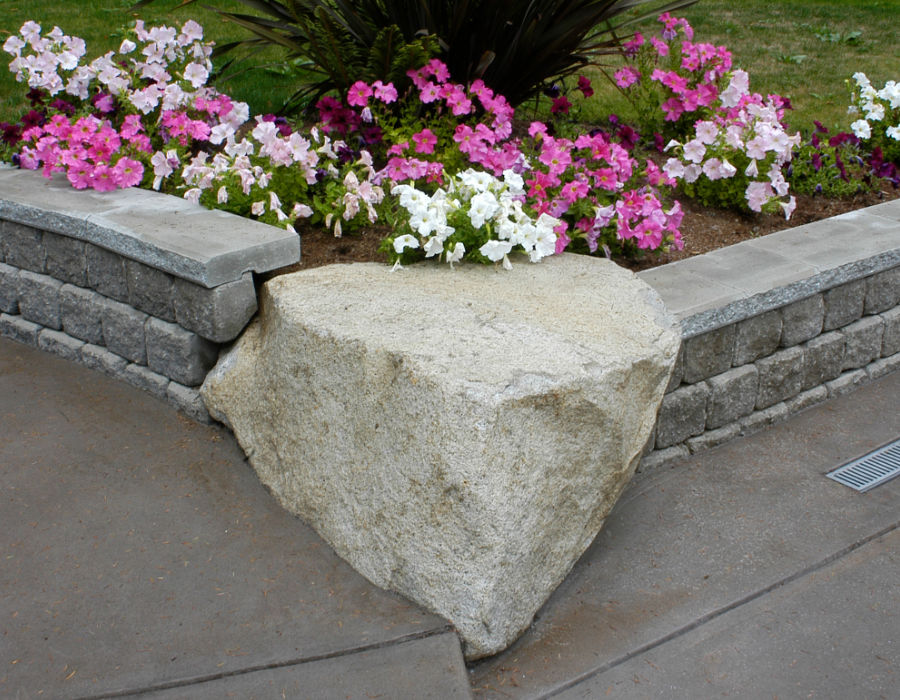
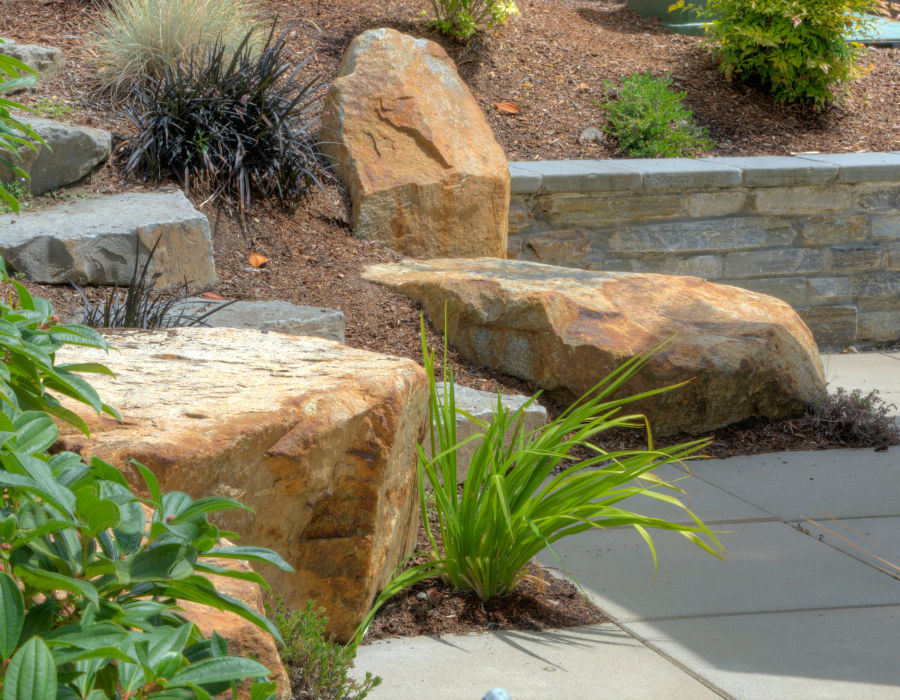
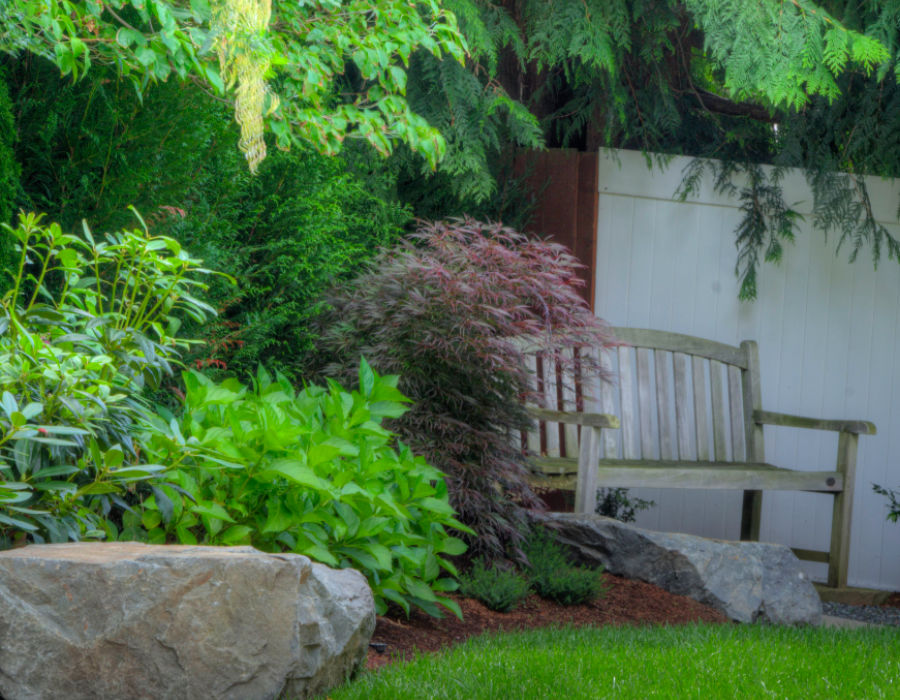
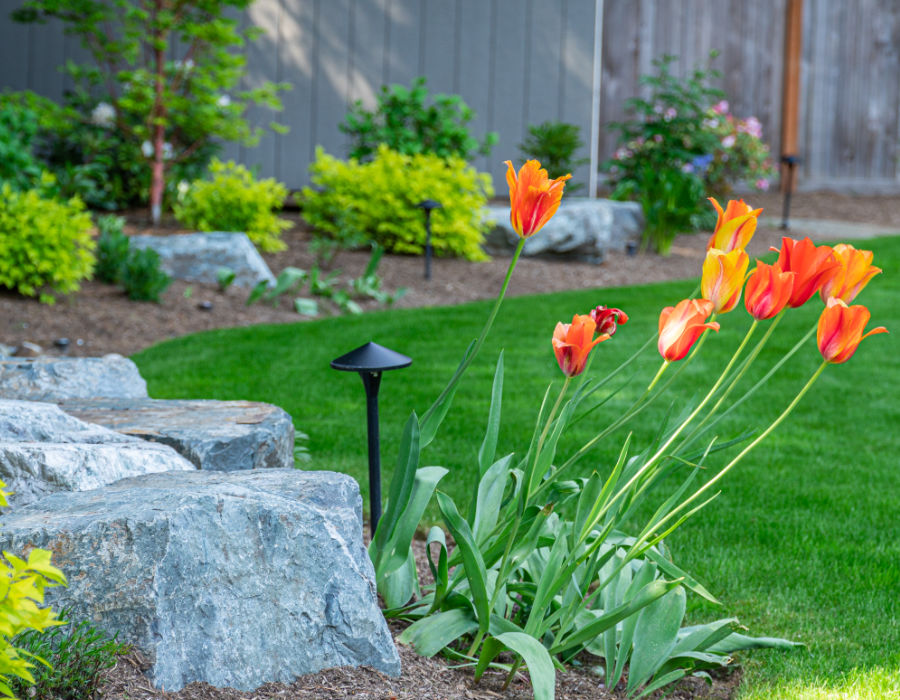
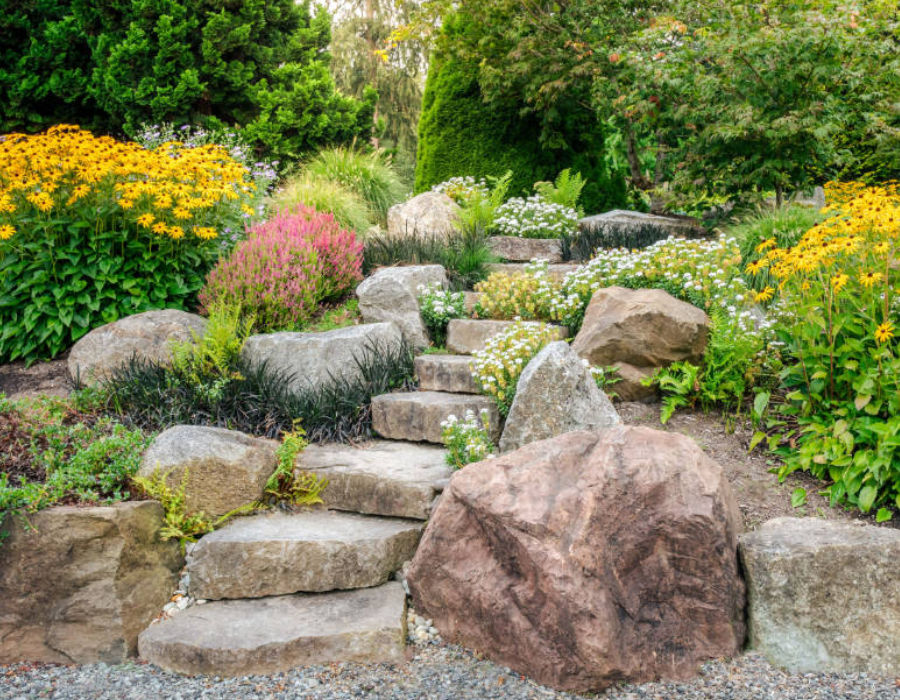
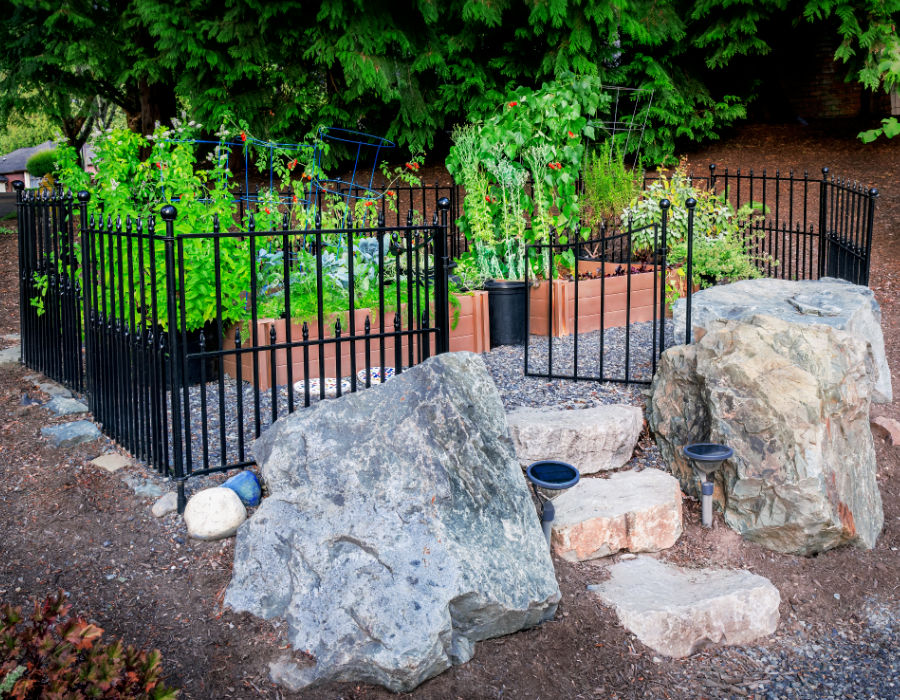
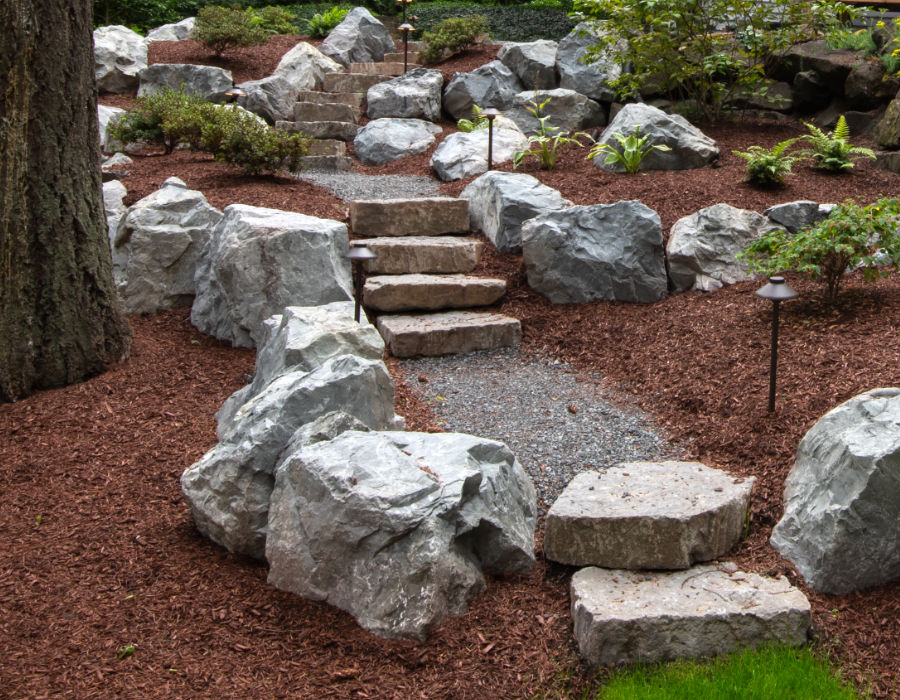
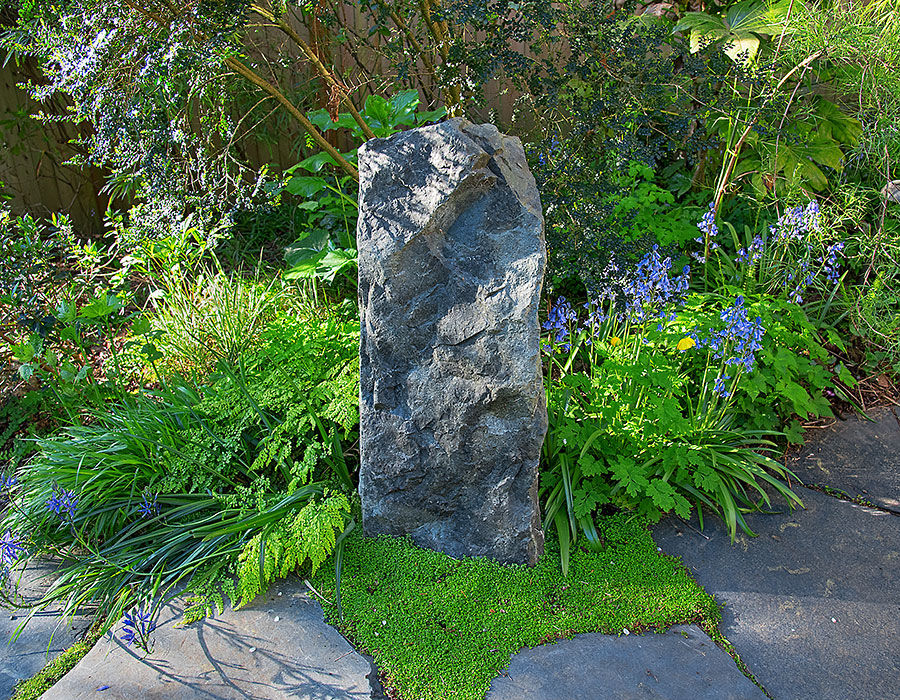
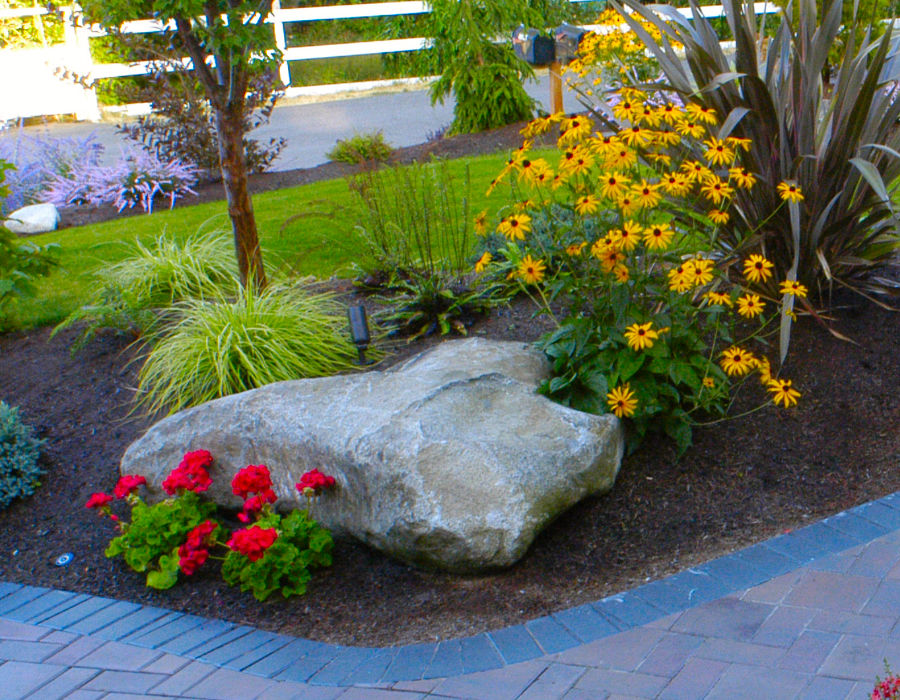
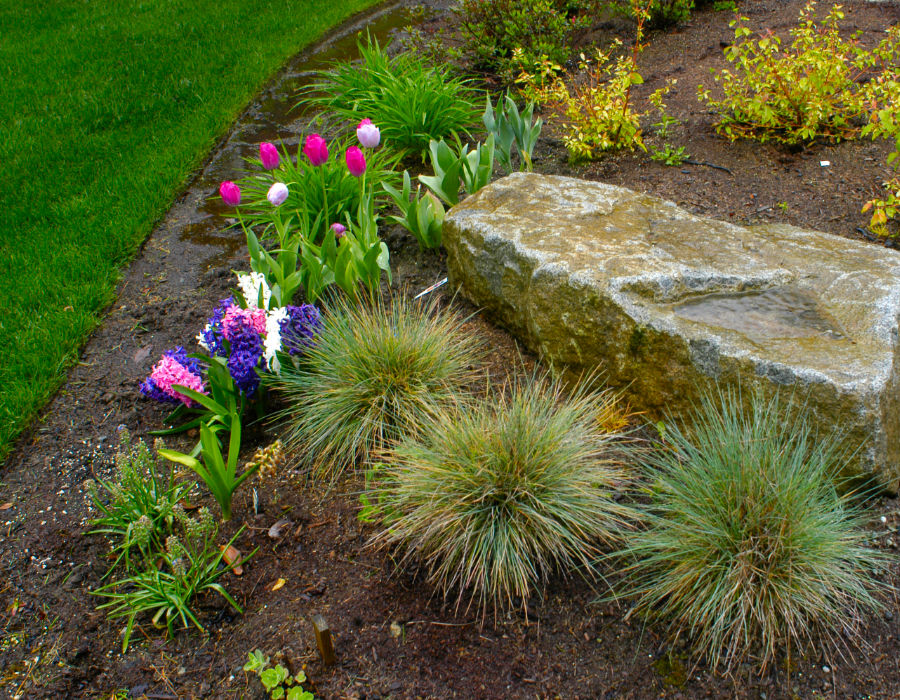
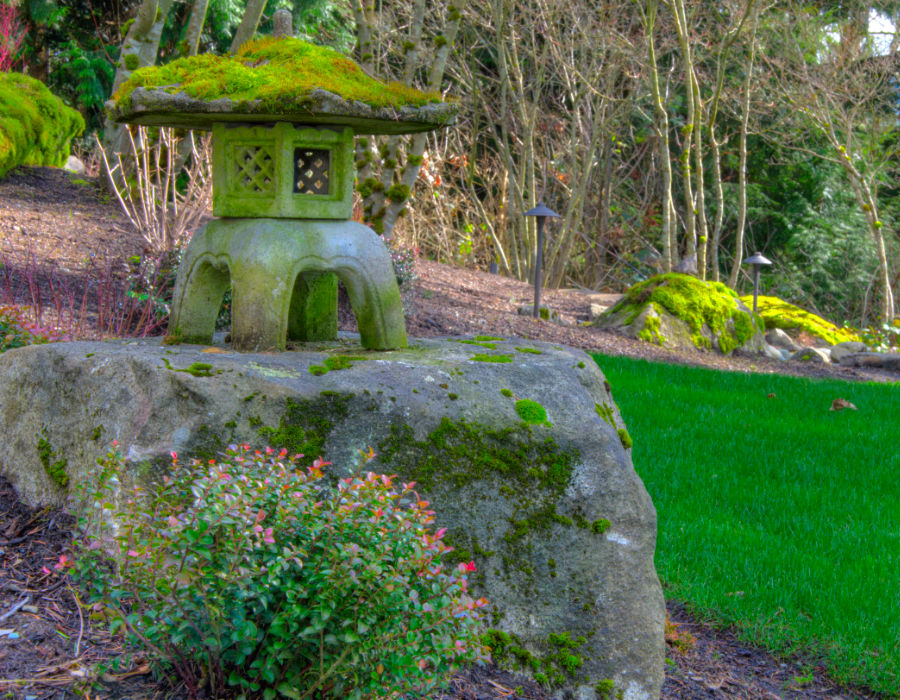
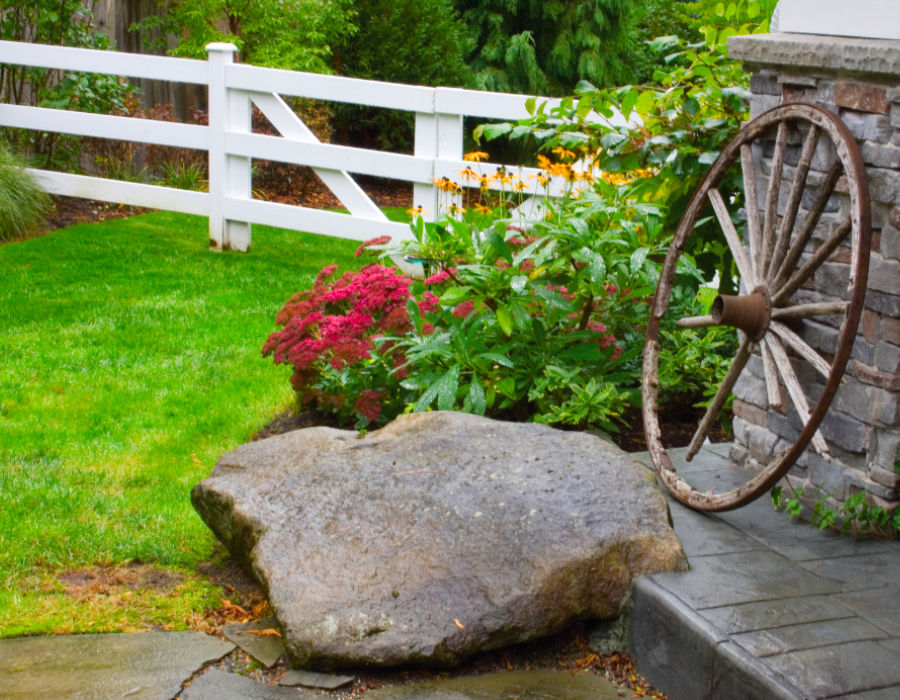
In the Pacific Northwest, the region's true identity is found in a massive skeletal geometry of volcanic rock and glacial debris that holds the wild in place. For homeowners, successful landscaping means tapping into this rugged geography. When we incorporate large-scale stone, we aren't just decorating; we are grounding the home in the Northwest’s elemental identity through three key functions:
- Natural Scale In a land of 100-foot evergreens, small stones vanish. Large boulders provide the necessary visual weight to balance the scale of the forest, ensuring your garden feels intentional rather than overwhelmed by its surroundings.
- Geological Anchors Using heavy stone creates a "site-authentic" look. It suggests the garden was carved directly from the earth’s crust, making the landscape feel like a permanent part of the local terrain.
- Living Foundations Our maritime mist transforms stone into a life-support system. Large rocks act as thermal anchors and cooling sponges, creating the moist, sheltered microclimates that allow native ferns and mosses to thrive.
To achieve a look that feels revealed by the rain rather than dropped on the grass, you must choose stone that mirrors our local geography. We categorize these stones by size and weight to ensure they fit the scale of your property:
- Two-to-Three Man Boulders (200–700 lbs) These are the workhorses of the Northwest garden. They are large enough to anchor a planting bed but small enough to be positioned with mini-excavators.
- Feature Boulders (1,000 lbs to several tons) These are the true "shattered spines" of the landscape. These machine-set stones provide the massive scale needed to stand up to mature Douglas firs.
- Columnar Basalt These dark, charcoal-grey pillars mimic the volcanic cliffs of the Columbia Gorge. Sold by the linear foot, they are perfect for vertical structures or "bubbler" water features.
- Glacial Granite Salt-and-pepper in tone and rounded by ancient ice, these boulders are ideal for the Puget Sound aesthetic. They look most natural when nestled into slopes or dry creek beds.
- Weathered Fieldstone Often arriving with a pre-established patina of moss and lichen, these stones are the best choice for an immediate, "been-here-forever" woodland garden.
To make a boulder look like it was revealed by the earth rather than dropped on top of it, professional landscapers never leave a rock sitting on the surface like a "garden potato." Instead, dig a shallow pit and bury the bottom 25% to 33% of the stone. This "iceberg effect" makes the rock appear as though it is a massive subterranean shelf peaking through the surface.
To complete the look, use plants that embrace the stone rather than hide it. Plant your greenery directly against the stone’s edge so the roots can tap into the thermal moisture trapped beneath.
- Western Sword Fern: Arching green fronds provide a soft contrast to rounded, light granite.
- Vine Maple: Delicate leaves are framed by the dark, vertical lines of basalt pillars.
- Kinnikinnick: This hardy groundcover "carpets" the rock to make it look centuries old.
- Deer Fern: These small ferns thrive in the moist, rocky crevices of dry creek beds.
Ultimately, big rocks provide a silent, static contrast to the lush, rapid growth of our native greenery. By mimicking the region's natural outcroppings, you give your landscape an enduring structure that remains beautiful in every season. A well-placed boulder is the only part of a garden that doesn't just grow; it matures, anchoring your home in the timeless character of the Northwest.
Is your garden missing its shattered spine? Don’t settle for a "flat" landscape that gets lost in the rain. Whether you’re looking to install towering Columnar Basalt or want to set a massive Feature Boulder as a permanent anchor, our team specializes in site-authentic stone placement.
Contact Reynolds Landscape today to start building a landscape that doesn't just grow—it endures. CLICK HERE to request a consultation.
Want to add color to your yard in winter? Read "Our Favorite Winter Plants" here.
Want to see how we use big rocks and boulders in real projects? Browse our Rocks & Boulders portfolio here.
